

Published December 24, 2025
Interior Lighting Tips to Lift Winter Spaces
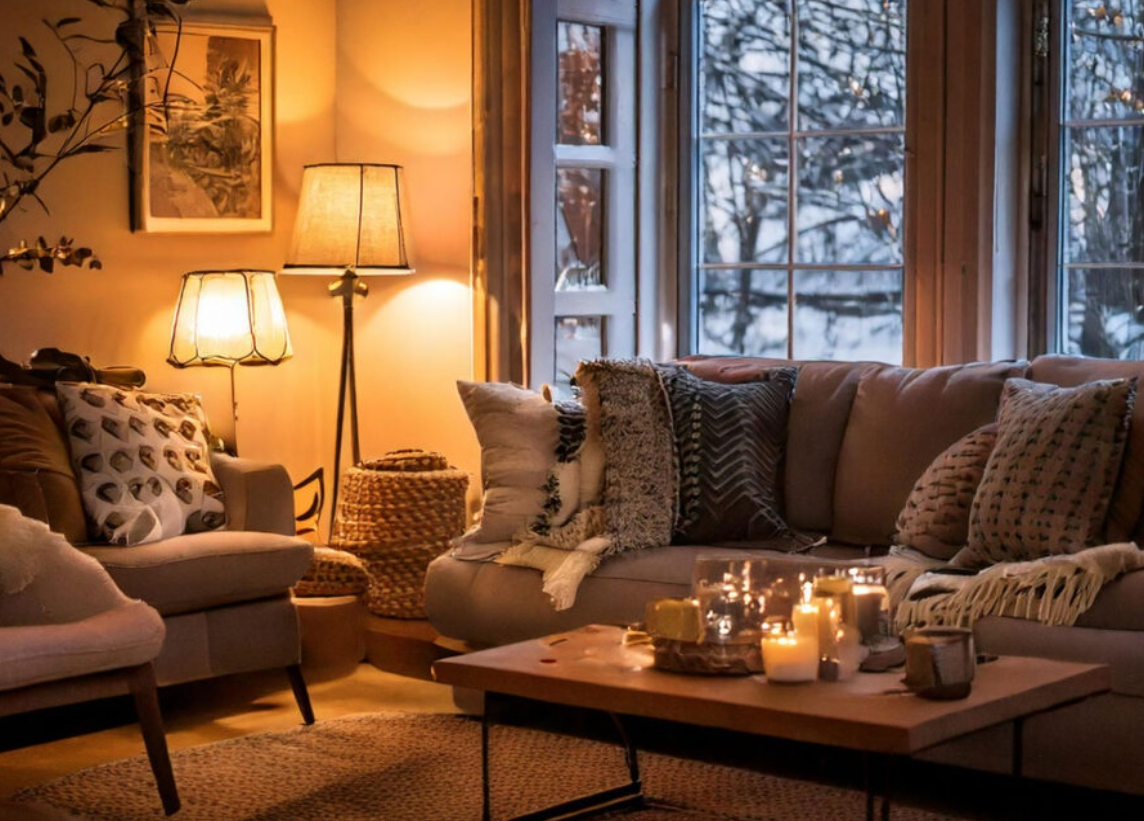
As winter brings shorter days and lower light levels, both inside and out, thoughtful lighting becomes one of the most effective ways to create warmth and lift the mood at home. While the sun cannot be controlled, interior lighting can be layered, adjusted, and styled to keep winter spaces feeling bright and inviting.
This guide outlines practical ways to use wall lights, lamps, and design details to banish the winter blahs and make every room feel more cheerful through the darker season!
Simple Ways to Make a Home Brighter in Winter

Increase overall brightness. Use more than one overhead light and lamp. Add floor lamps in dark corners and wall sconces on shaded walls to eliminate shadows and create even light.
Use decorative impact. Replace basic ceiling fixtures with chandeliers or pendants to add warmth and personality. Crystal accents create sparkle, while vintage bulbs and shades add a soft glow.
Layer the light. Combine ambient, task and accent lighting. Start by adding sconces to the darkest wall, a table lamp on a console or a floor lamp in a dim corner.
Boost task lighting. Place table lamps on side tables, consoles and sofa tables to brighten high-use areas.
Strengthen ambient light. Add recessed lighting in rooms with low natural light. Downlighting over fireplaces or bookshelves adds warm emphasis.
Use Decor to Reflect and Amplify Light

Decor is an easy way to brighten the mood of a room. Light-toned pillows and throws, bright artwork, mirrors, reflective accents and lighter rugs immediately lift a space. Painting frequently used rooms in softer or sunny hues can make an even bigger impact. Hygge-inspired touches like candles, warm textiles and cozy fixtures help winter spaces feel welcoming.
Room-by-Room Lighting Tips

Living room: A chandelier or pendant anchors the space, with sconces or recessed lighting brightening the perimeter. Floor lamps that aim light upward and table lamps complete the layering.
Dining room: Balance an overhead fixture with wall sconces and lamps on buffets or sideboards so the entire room feels lit, not just the table.
Kitchen: Bright task lighting works best. Pendants or a chandelier over the island, recessed lighting near work areas and undercabinet lighting add function and clarity.
Bathroom: Use recessed lights in the shower, pendants or chandeliers for ambient brightness and vanity lighting for grooming.
Bedroom: Combine overhead lighting with sconces and floor lamps to brighten darker areas, then lower the light as part of an evening routine.
Use Technology to Tailor Your Light Levels
Smart lighting systems allow lights to turn on before you arrive home and shift from cooler daytime tones to warmer evening temperatures. White-tuning LEDs allow adjustments from daylight brightness to candlelight softness. Dimmers offer full control, from bright morning light on gray days to low lighting for evening relaxation.
Choose Lighting That Mimics Sunlight

Full-spectrum bulbs bring natural-feeling light indoors.
- 2000K–3000K: Warm, relaxing tones
- 3100K–4500K: Bright white for work areas
- 4600K–6500K: Daylight tones for task-heavy spaces
LEDs offer efficiency and flexibility. Halogens provide crisp task lighting. Incandescents give warm, dimmable light but use more energy.
Winter light can be sparse, but layered lighting, thoughtful fixtures and attention to color temperature help create a cheerful and welcoming home until spring arrives. As always, for wiring or electrical updates, always consult a licensed electrician.
If you are thinking about refreshing your home before selling or want help choosing lighting updates that elevate your space and enhance future market appeal, reach out anytime for guidance and next steps!
